Web design and development in Washington, D.C.
Get a website for your Washington, D.C. business that gives visitors clear information and a direct way to enquire. We design pages for desktop and mobile, build contact or quote forms, and route messages to the right inbox. From our studio in India, we work with you through discovery, design, build and launch, with your feedback shaping the work along the way.
- 250+ projects delivered
- Reviews on Google ↗
- Reply within 1 working day
Reply within 1 working day
What happens next
- 01Tell us what you need, in the form or on WhatsApp.
- 02Sohail replies within 1 working day (Mon–Sat, IST).
- 03We agree the scope together, then send your quote.
- Projects delivered
- 0+Projects delivered
- Years building for the web
- 0+Years building for the web
- Live and in use
- 0%Live and in use
What you get
What’s included in website design & development
UX & page design
Sitemap, wireframes and page designs for desktop and mobile, refined with your feedback.
Custom development
Clean, fast code in Next.js, or WordPress when your team needs full editing control.
Content management
An editor for pages, news, projects and careers that your team can use without training.
Forms & enquiries
Contact and quote forms routed to the right inbox, plus WhatsApp and click-to-call.
Search-ready build
Metadata, structured data, sitemaps and fast load times on every page.
Launch & handover
Domain, email, analytics and Search Console set up, with a walkthrough for your team.
Tools we use: Next.js, React, WordPress, Tailwind CSS, Vercel, Cloudflare.
Choosing
Should you choose WordPress, a custom site or a builder?
Start with who will update the site. WordPress suits a team that publishes often and wants to edit most pages itself. It also has a large choice of plugins, though someone needs to keep those and the platform updated for security. A custom-coded site in Next.js suits a design that needs more freedom from templates, fast pages and tight security; structural changes are generally a developer’s job.
A hosted builder such as Wix, Squarespace or Webflow suits a small site that you want to run yourself. You have less control over code and speed, and moving away later can mean rebuilding the site. That trade-off deserves a place in the brief before you pick a platform.
The design approach is a separate choice. A custom design fits a distinctive brand, audience or body of content. An adapted template can suit a simple site with a tight brief, provided the pages are reworked around your actual content. Bring your editing needs and page priorities to the discussion, and we can recommend an approach after learning how your team works.
Local
What Washington, D.C. organisations need from their websites
Industry associations and non-profit organisations are prominent in Washington, D.C. If your organisation needs people to understand its work and get in touch, plan a clear page structure and a contact form that reaches the person who handles enquiries. Agree who owns the content and the messages before design starts.
Think tanks in the city need to make expertise easy to assess. Clear pages for areas of work and the people behind them give a visitor somewhere to check credentials before making contact. Decide which information belongs on each page before settling on its visual treatment.
International organisations also have headquarters in the city. Their sites need a sitemap and page structure that help visitors find the right information, with an editor for the people responsible for keeping it current. Make those responsibilities part of the brief.
Rules
What a US website project needs to handle
Accessibility belongs in the brief. US guidance says the ADA covers the web services of businesses open to the public, and identifies WCAG as helpful guidance. State and local government sites have a WCAG 2.1 Level AA requirement. We agree an accessibility target with you, then use it to guide the sitemap, wireframes and page designs for desktop and mobile. Set that target before design feedback starts, so the team has a clear basis for reviewing the work.
How it runs
How a website project runs with us
We work remotely over video calls, WhatsApp and shared project boards. India is ahead of Eastern time, and the gap changes with daylight saving. We use the shared board to keep feedback and decisions visible across that gap.
- 01
Discover
Tell us who buys from you, why they choose you and what you want visitors to do. We use those answers to shape the sitemap.
- 02
Wireframe
We put the content and its order on each page. Review the priorities at this stage; colours can wait for the visual design.
- 03
Build
We develop the site or an editable CMS and test it on real devices and browsers. Your team reviews the work as it comes together.
- 04
Check
Proofread every page, submit each form and confirm who receives its messages. This gives you a practical check on the details visitors will encounter.
- 05
Launch
We set up your domain, email, analytics and Search Console, then walk your team through the handover.
Checklist
What to have ready before we talk
Gather these items before the discussion so we can understand your starting point and who will handle the work on your side.
- Your logo in SVG, AI or EPS, plus brand colours and fonts, or a note that these still need creating.
- The site’s goal, such as quote requests or job applications, and the person who handles each enquiry.
- Sites you like and dislike, with a short reason for each choice.
- Login details for the domain, hosting, email, analytics and Search Console, or the name of their owner.
- Real photos of your team, premises and finished work, with a photo shoot arranged ahead if needed.
- A folder of case studies, permitted client logos, testimonials, certifications and memberships.
Cost & time
What affects the cost and timing of a website
The scope determines the work. These decisions affect both the design and what has to be prepared or checked.
Page templates
Distinct layouts take more design and build work than pages that share a template, even when the shared template holds substantial content.
Content readiness
Copy and photos ready to publish reduce the work; adding copywriting, photography or translation expands it.
Migration
Moving blog posts, news archives and downloadable files from an old site adds transfer and checking work.
Brand readiness
An existing logo and style guide reduce design decisions compared with a brand whose colours and typefaces are still being settled.
Avoid
Mistakes to avoid during website design
Approving desktop alone
Review every page on a phone as well, since visitors use phones to reach company sites.
Copying the old sitemap
Keep the service pages your visitors need instead of carrying over every page. A shorter site is easier to scan and maintain.
Using placeholder copy
Put real headings and paragraphs into the design. Their length can change a layout that looked finished with placeholder text.
Leaving search setup until launch
Check page titles, the sitemap and any development indexing block before the site goes live.
Our work
Projects we’ve built
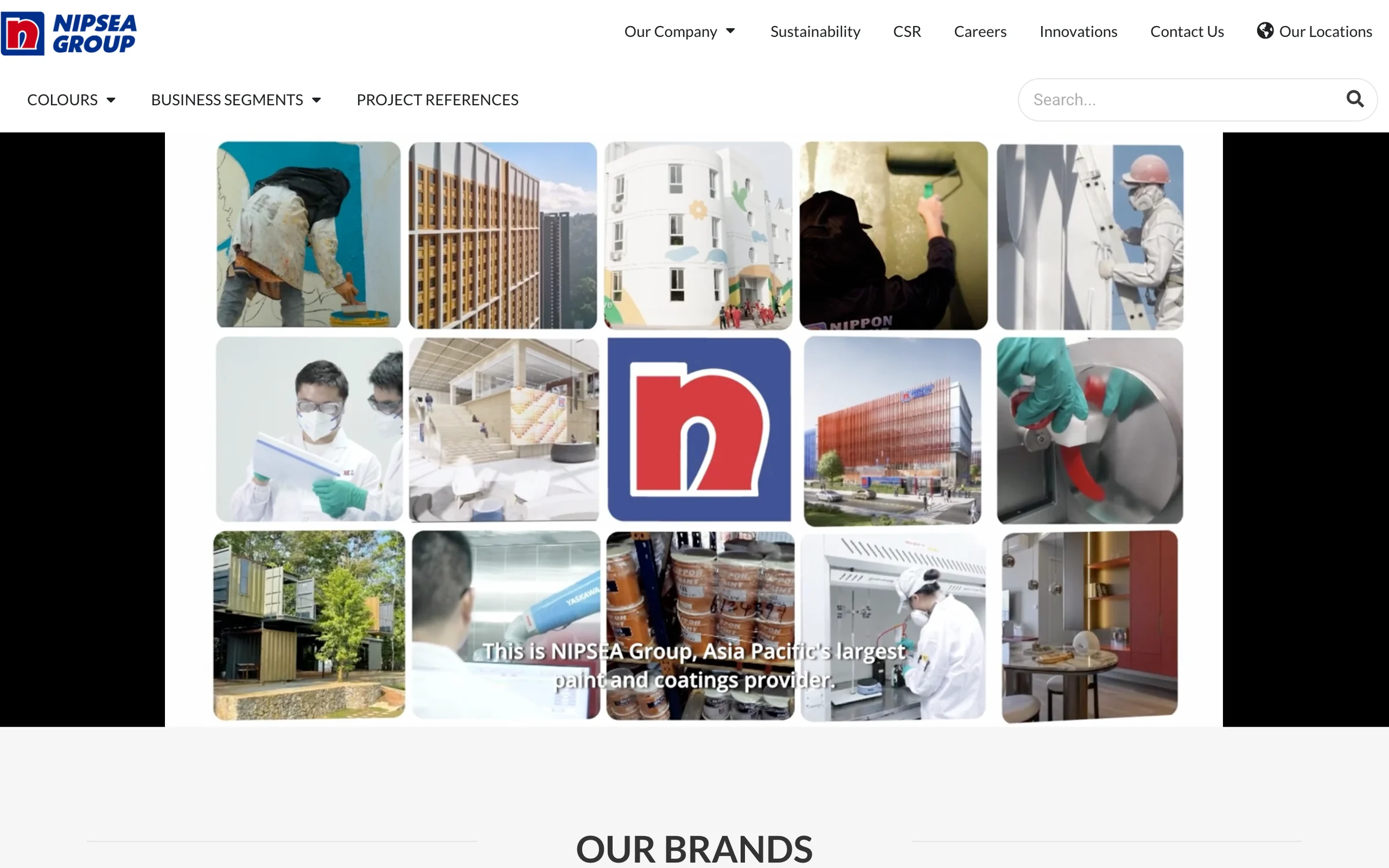
- NIPSEA GroupGroup website for NIPSEA Group (Nippon Paint), Asia Pacific’s largest paint and coatings group, headquartered in Singapore with more than 147 companies across 28 locations.nipsea.group
- iWISERSBrand website for iWISERS, a social and data intelligence agency that tracks every conversation about a brand and turns it into action.iwisers.com

Questions
Asked by businesses in Washington, D.C.
Page updated 5 November 2026
Is a website still worth building?
Yes, when it gives visitors a useful route to contact you and gives your team a way to assess those enquiries. In analytics, track form submissions, calls and WhatsApp clicks as conversions, then check which pages people started from. That makes the site’s role easier to review after launch.
How much does it cost to have a website built?
There is no fixed price. The scope of the pages and content editor, and whether you need a separate editor paired with a custom front end, affect the work. That separate setup has more parts to host and maintain. We send a free quote once the scope is agreed.
Should I use WordPress or a custom website?
Choose around the way your team edits. We build in WordPress when your team needs full editing control, or in Next.js for a custom site. A custom site can still include an editor, so ask who needs to change content and who will handle structural changes before making the choice.
What is included in the website build?
The work includes page design, development, forms, search setup and handover. For search, we prepare page titles and descriptions, a clear heading structure, an XML sitemap and structured data. Addressing these during the build takes less effort than returning to fix them after launch.
Will I own the website after launch?
Yes. You own the domain, content and code. Also decide who on your team will update news, projects and job posts once the site is live. Keeping that responsibility clear helps you avoid leaving an old post as the most recent sign of activity on the site.
Can you work with our existing brand?
Yes. We build on your existing logo, colours and fonts, and prepare brand assets for the web where needed. Share the files and style guidance you already use so that the page designs start from your established identity and your team can review how it appears on screen.
Tell us what you need
Sohail, Founder, replies within 1 working day (Mon–Sat, IST). Free and no obligation.
Website design & development nearby
Also in Washington, D.C.