Web design and development in Tasmania
Give visitors a clear route from your services to an enquiry with a website designed for your business in Tasmania. We plan your pages for desktop and mobile, set up contact and quote forms, and prepare each page for search. Working with you from India, we use your feedback to refine the design before the site is built.
- 250+ projects delivered
- Reviews on Google ↗
- Reply within 1 working day
Reply within 1 working day
What happens next
- 01Tell us what you need, in the form or on WhatsApp.
- 02Sohail replies within 1 working day (Mon–Sat, IST).
- 03We agree the scope together, then send your quote.
- Projects delivered
- 0+Projects delivered
- Years building for the web
- 0+Years building for the web
- Live and in use
- 0%Live and in use
What you get
What’s included in website design & development
UX & page design
Sitemap, wireframes and page designs for desktop and mobile, refined with your feedback.
Custom development
Clean, fast code in Next.js, or WordPress when your team needs full editing control.
Content management
An editor for pages, news, projects and careers that your team can use without training.
Forms & enquiries
Contact and quote forms routed to the right inbox, plus WhatsApp and click-to-call.
Search-ready build
Metadata, structured data, sitemaps and fast load times on every page.
Launch & handover
Domain, email, analytics and Search Console set up, with a walkthrough for your team.
Tools we use: Next.js, React, WordPress, Tailwind CSS, Vercel, Cloudflare.
Choosing
Should you choose WordPress or a custom website?
Choose WordPress when your team publishes often and wants to edit most of the site itself. Its choice of plugins gives you options for adding features, though someone needs to keep the installation updated for security. Before choosing it, think about who will own that maintenance alongside the content.
A custom-coded site in Next.js suits a design that needs to work beyond template limits, with fast pages and tight security. It is a good fit when you are comfortable asking a developer to make structural changes. A custom design also makes sense when your brand, content or audience has specific needs that a standard layout cannot accommodate.
A template is worth considering for a simple site with a tight brief, provided the layout is reworked around your actual content. We look at how your team works before recommending WordPress or a custom build; a custom site can still have an editor for content.
Local
What Tasmania’s businesses need from a website
Tasmania’s tourism and healthcare organisations need visitors to find different information quickly. A tourism business can use a clear enquiry route for its services, while a clinic needs practitioner profiles, opening hours and a booking or call option that works on a phone. We set up contact and quote forms, along with WhatsApp and click-to-call where they fit the enquiry process.
Agricultural exporters and forestry suppliers in Tasmania may need to answer detailed buyer enquiries. Product or capability pages give those buyers a place to check what is available; certifications and downloadable specifications provide further detail. A quote form should ask for enough information for your team to respond properly.
Rules
What an Australian website project has to handle
Australia’s digital accessibility guidelines recommend WCAG 2.2 at a minimum of Level AA. We agree an accessibility target in your brief and use it to guide the page designs, rather than leaving the target undecided until launch.
If you provide health services, the Privacy Act covers your organisation regardless of turnover. We include a privacy policy page and set up your contact forms with an agreed list of requested information, an inbox for enquiries and a confirmation message for visitors.
How it runs
How the project runs with us
We work remotely over video calls, WhatsApp and shared project boards. India is 4h30m behind Hobart, and 5h30m behind during daylight saving time; the shared board keeps feedback and decisions visible across the difference.
- 01
Discover
Tell us who buys from you, why they choose you and what you want visitors to do. We use those answers to shape the sitemap.
- 02
Plan
We prepare wireframes showing what goes on each page and in what order. Your feedback focuses on content and priorities before colours are chosen.
- 03
Build
We develop the site in code or with a content management system your team can edit, then test it on real devices and browsers.
- 04
Check
You proofread every page, submit each form and confirm who receives its messages before the site goes live.
- 05
Launch
We set up the domain, email, analytics and Search Console, then walk your team through the handover.
Checklist
What to have ready before we talk
Gather what you already have and note any gaps.
- Brand filesYour vector logo, colours and fonts, or a note that they still need creating.
- Proof of workCase studies, permitted client logos, testimonials, certifications and memberships in a shared folder.
- PhotosImages of your team, premises and finished work; arrange photography ahead if needed.
- A goalDecide if you want quote requests, applications or calls, and who handles each enquiry.
- ExamplesBring sites you like and dislike, with a short reason for each choice.
Cost & time
What affects the cost and timeline
The scope determines how much design, build and launch work needs an owner.
Features
Calculators, booking, member logins, multiple languages and CRM connections add design, development and testing work.
Existing content
Moving blog posts, news archives and downloadable files adds migration and checking work.
Brand readiness
An established logo and style guide reduce design work compared with deciding colours and typefaces during the project.
Content gathering
Service descriptions, team biographies, case studies and photos need owners; collecting them often takes longer than approving the design.
Avoid
Mistakes to avoid
Picking the platform too early
First decide who will update the site and how often, then choose the editing setup around that work.
Reviewing only on a large screen
Check every page on a phone before approving the design, including how easily visitors can read and use it.
Leaving search setup until after launch
Check page titles and the sitemap, and make sure an indexing block from development has not been left in place.
Our work
Projects we’ve built
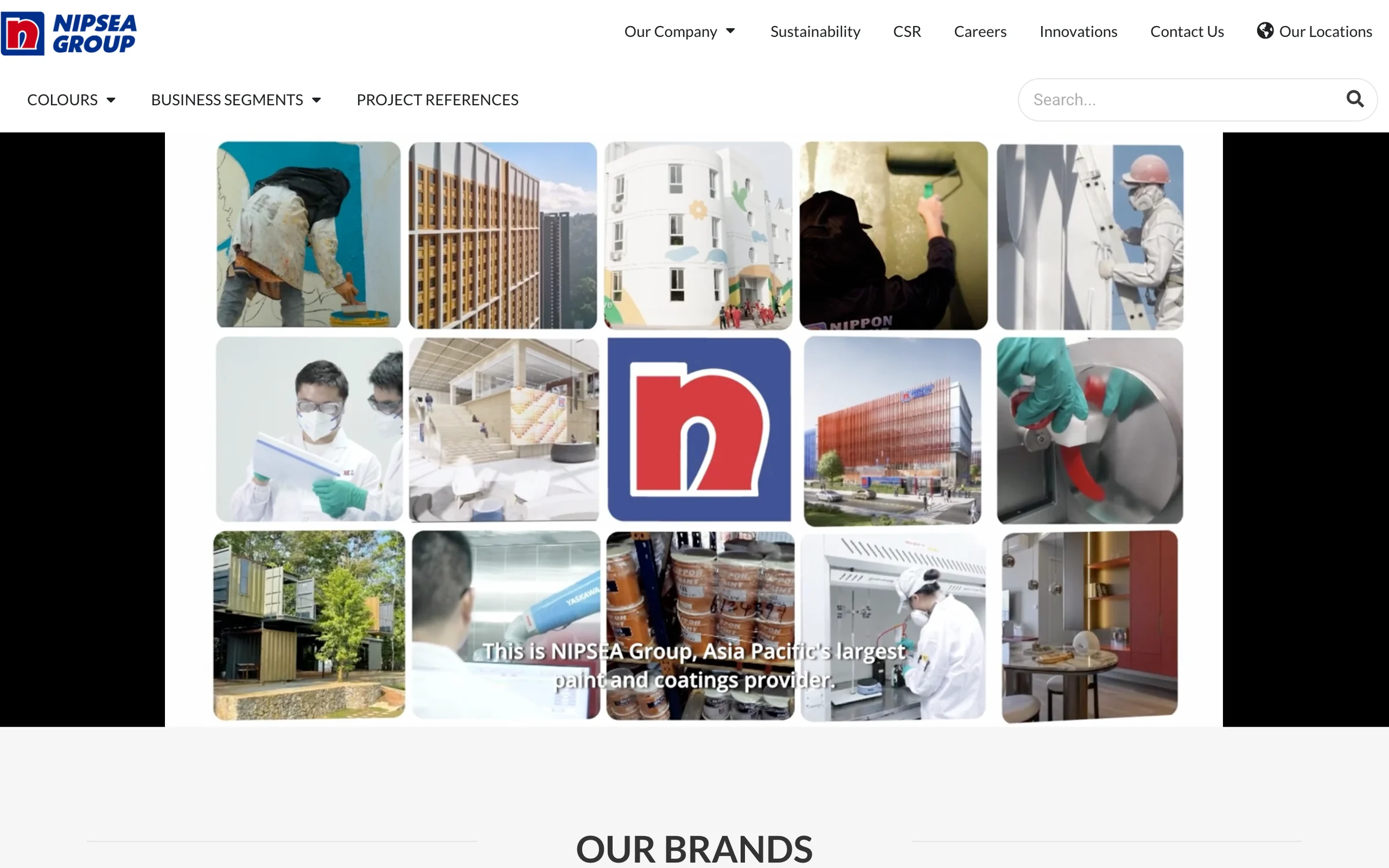
- NIPSEA GroupGroup website for NIPSEA Group (Nippon Paint), Asia Pacific’s largest paint and coatings group, headquartered in Singapore with more than 147 companies across 28 locations.nipsea.group
- iWISERSBrand website for iWISERS, a social and data intelligence agency that tracks every conversation about a brand and turns it into action.iwisers.com

Questions
Asked by businesses in Tasmania
Page updated 5 November 2026
Is a business website still worth building?
A website is worth considering when you need a clear place to explain your services and receive enquiries. You do not need to copy every page from an old site or a competitor: a shorter set of clear service pages is easier for visitors to scan and for your team to maintain.
How much does a website cost?
There is no fixed price. The amount of content you need and its readiness drive the scope: ready-to-publish copy and photos mean less work, while copywriting, photography or translation add to it. Rank the services you want to feature. We send a free quote once we have agreed the scope with you.
Should I use a website builder instead?
A hosted builder such as Wix, Squarespace or Webflow suits a small site you want to run alone. You give up some control over code and speed, and moving away later can mean rebuilding. A headless setup is another option for heavy editing with a custom front end, though it has more parts to host and maintain.
What is included in the website build?
We provide an editor your team can use for pages, news, projects and careers, along with page metadata, structured data and a sitemap. If you already have a logo, colours and fonts, we build on them and prepare the brand assets for the web where needed.
Will I own my website?
Yes. You own the domain, content and code. Hold the domain and hosting accounts in your business’s name and grant access to the people working on the site. That keeps the accounts under your control if you change who maintains the website later.
What happens after the website launches?
We offer ongoing support after launch. You should also decide who will update news, projects and job posts so those sections stay current. In analytics, track form submissions, calls and WhatsApp clicks as conversions, then check which pages visitors started from when they made contact.
Tell us what you need
Sohail, Founder, replies within 1 working day (Mon–Sat, IST). Free and no obligation.
Website design & development nearby