Website development company in California
You get a website designed for your business in California, with desktop and mobile page designs and a quote form for prospective clients. We are a web, app and AI studio in India, and we work with you on the pages and enquiry routes your business needs.
- 250+ projects delivered
- Reviews on Google ↗
- Reply within 1 working day
Reply within 1 working day
What happens next
- 01Tell us what you need, in the form or on WhatsApp.
- 02Sohail replies within 1 working day (Mon–Sat, IST).
- 03We agree the scope together, then send your quote.
- Projects delivered
- 0+Projects delivered
- Years building for the web
- 0+Years building for the web
- Live and in use
- 0%Live and in use
What you get
What’s included in website design & development
UX & page design
Sitemap, wireframes and page designs for desktop and mobile, refined with your feedback.
Custom development
Clean, fast code in Next.js, or WordPress when your team needs full editing control.
Content management
An editor for pages, news, projects and careers that your team can use without training.
Forms & enquiries
Contact and quote forms routed to the right inbox, plus WhatsApp and click-to-call.
Search-ready build
Metadata, structured data, sitemaps and fast load times on every page.
Launch & handover
Domain, email, analytics and Search Console set up, with a walkthrough for your team.
Tools we use: Next.js, React, WordPress, Tailwind CSS, Vercel, Cloudflare.
Choosing
Should you choose WordPress or a custom website?
WordPress suits a team that publishes often and wants to edit most of the site itself. Its plugins offer a wide choice of features, although someone needs to keep them updated for security. A custom Next.js site suits a business that wants fast pages, tight security and a design without template limits. Structural changes need a developer.
The design choice is separate from the platform. A custom design fits content or an audience with specific needs; an adapted template can fit a straightforward brief when it is reworked around your real content. Hosted builders such as Wix, Squarespace and Webflow suit small sites an owner wants to run alone, with less control over code and speed and a possible rebuild if you move away.
A headless setup combines a custom front end with a separate editor when you need speed and substantial editing control, but it adds hosting and maintenance work. We recommend an approach after understanding how your team works; a custom site can still have an editor.
Local
What California businesses need from their websites
California’s agricultural industry includes dairy, almonds and grapes. Suppliers serving that industry need product or capability pages, certifications and downloadable specifications, plus a quote form that gives them enough detail to respond. Those details help a buyer assess what you offer before making contact.
California’s technology industry includes engineering and consulting work around Silicon Valley. An engineering firm needs a portfolio with project photos and details that prospective clients can assess. A consulting practice needs clear pages for its services and partners, so a buyer can check relevant expertise and credentials before calling.
Rules
What a United States website needs to handle
For a business open to the public, US guidance says the ADA covers goods and services offered on the web and identifies WCAG as helpful guidance. We set up a clear heading structure and page titles, and use WCAG to guide the page design review. Give the review space in the project so page structure and content can be addressed before launch.
How it runs
How a website project runs with us
We work remotely over video calls, WhatsApp and shared project boards. India is 13h30m ahead of Pacific time in winter, and 1 hour less during daylight saving time. The shared board gives you a place to leave feedback and see the work between calls.
- 01
Discover
We learn about your business, audience and goals. You help us agree what belongs in the scope.
- 02
Plan and design
We map the pages and make wireframes before visual design. Review the content order and priorities first, then give feedback on the desktop and mobile designs.
- 03
Build
We develop the site or an editable CMS and test it on real devices and browsers. Your team can review the working pages.
- 04
Check
You proofread every page, submit each form and confirm who receives its messages. This catches small errors visitors would otherwise see.
- 05
Launch
We set up the domain, email, analytics and Search Console, then walk your team through the handover.
Checklist
What to have ready before we talk
Bring what you have, and note what still needs work.
- Your main site goal and the person who handles each type of enquiry.
- A ranked list of services or products for the navigation and home page.
- Real photos of your team, premises and completed work, or a plan to arrange them.
- A folder of case studies, testimonials, certifications and client logos you have permission to show.
- Sites you like and dislike, with a short reason for each choice.
Cost & time
What affects the cost and timeline
The amount of design, content and testing work changes the scope.
Features
Booking, member logins, calculators or a CRM connection add design, build and testing work.
Content
Ready-to-publish copy and photos keep the work smaller; photography, copywriting or translation add to it.
Migration
Moving old blog posts, news archives and downloadable files adds transfer and checking work.
Brand readiness
An existing logo and style guide reduce design work compared with deciding colours and typefaces during the project.
Avoid
Mistakes to avoid
Leaving real copy until the end
put actual headings and paragraphs into the layouts early, before their length disrupts an approved design.
Reviewing only on a desktop
check every page on a phone as well, including how the content reads on the smaller screen.
Copying every old page
keep the service pages visitors need and make the site manageable for your team to update.
Leaving search checks until launch
check page titles, the sitemap and any development indexing block before the site goes live.
Our work
Projects we’ve built
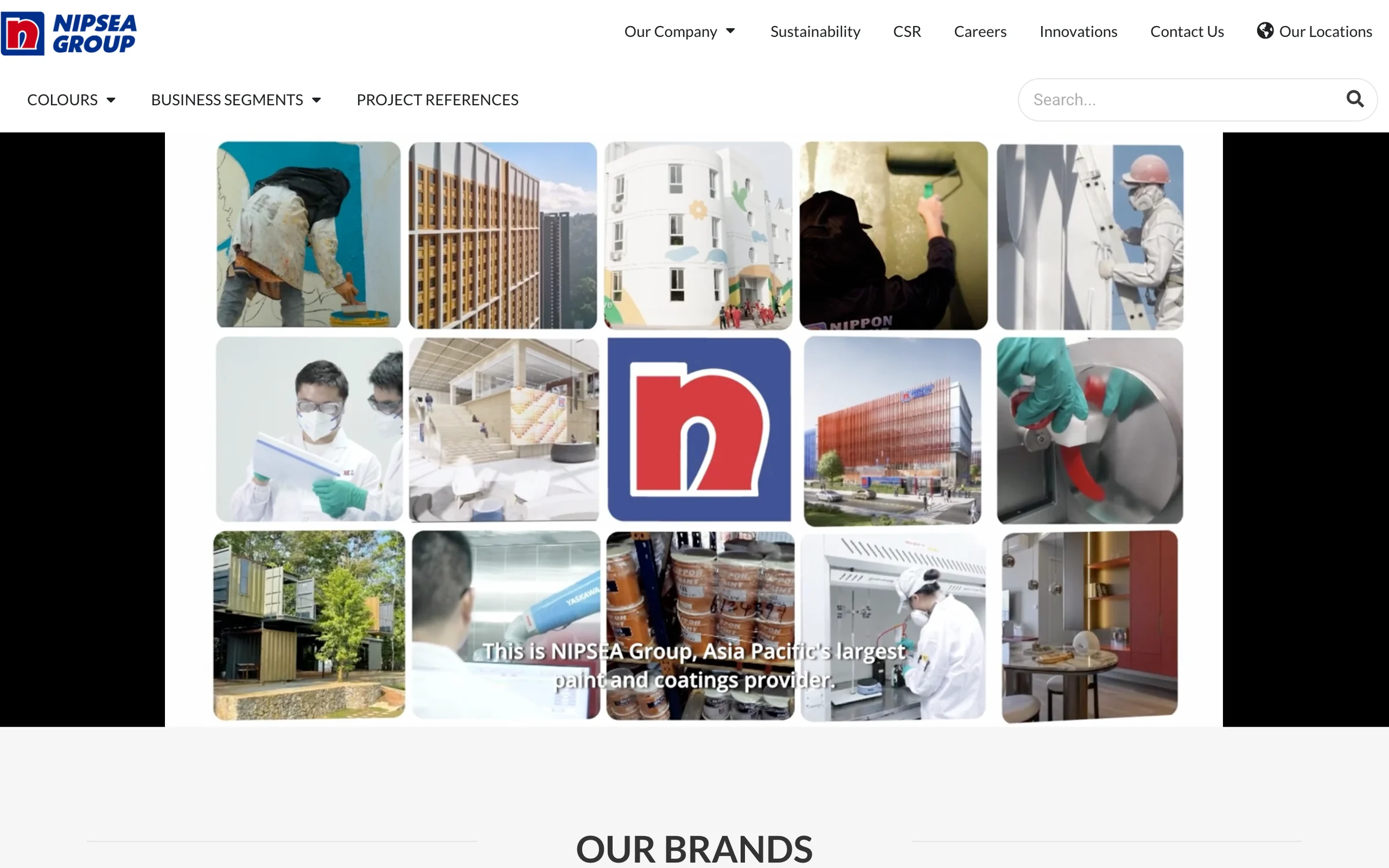
- NIPSEA GroupGroup website for NIPSEA Group (Nippon Paint), Asia Pacific’s largest paint and coatings group, headquartered in Singapore with more than 147 companies across 28 locations.nipsea.group
- iWISERSBrand website for iWISERS, a social and data intelligence agency that tracks every conversation about a brand and turns it into action.iwisers.com

Questions
Asked by businesses in California
Page updated 5 November 2026
How much does it cost to have a website built?
There is no fixed price for every website. The page scope, choice of build and responsibility for writing content all affect the work. A sitemap, an editor and service descriptions each need attention; agree what is included before requesting a quote so it reflects your requirements.
Is website development still worth it?
It is worth assessing against the enquiries you want the site to handle. Use analytics to track form submissions, calls and WhatsApp clicks as conversions, then check which pages visitors started from. That gives you a practical way to review the site after launch.
Can you use our existing brand?
Yes. We build on your existing logo, colours and fonts, and prepare brand assets for the web where needed. Share the files and the styles your team already uses, so the page designs can work with the identity your customers recognise.
Will we own our website?
Yes. You own the domain, content and code. Keep the domain and hosting accounts in your business’s name and grant access to the people working on the site. That keeps the accounts under your control when your arrangements with a supplier change.
Can our team update content and manage enquiries?
Yes. The content editor covers pages, news, projects and careers without training. For enquiries, agree who receives quote requests and what the confirmation message says, as well as where each form sends its messages. Those decisions give your team a clear route for handling responses.
What happens after launch?
Ongoing support follows launch. Your team should also decide who will update news, projects and job posts, so published information stays current. Give that person responsibility for checking the content regularly and passing on any changes the site needs.
Tell us what you need
Sohail, Founder, replies within 1 working day (Mon–Sat, IST). Free and no obligation.
Website design & development nearby
Also in California