Website design & development company in Ireland
You get a website built around what your customers need to find and do, with page designs for desktop and mobile, plus enquiry forms sent to the right inbox. For your business in Ireland, we plan the pages with your input and build the site around your content. From our studio in India, we work with you through design and development. The team at MSH Technologies builds websites, apps and AI products.
- 250+ projects delivered
- Reviews on Google ↗
- Reply within 1 working day
Reply within 1 working day
What happens next
- 01Tell us what you need, in the form or on WhatsApp.
- 02Sohail replies within 1 working day (Mon–Sat, IST).
- 03We agree the scope together, then send your quote.
- Projects delivered
- 0+Projects delivered
- Years building for the web
- 0+Years building for the web
- Live and in use
- 0%Live and in use
What you get
What’s included in website design & development
UX & page design
Sitemap, wireframes and page designs for desktop and mobile, refined with your feedback.
Custom development
Clean, fast code in Next.js, or WordPress when your team needs full editing control.
Content management
An editor for pages, news, projects and careers that your team can use without training.
Forms & enquiries
Contact and quote forms routed to the right inbox, plus WhatsApp and click-to-call.
Search-ready build
Metadata, structured data, sitemaps and fast load times on every page.
Launch & handover
Domain, email, analytics and Search Console set up, with a walkthrough for your team.
Tools we use: Next.js, React, WordPress, Tailwind CSS, Vercel, Cloudflare.
Choosing
Should you choose WordPress or a custom website?
WordPress suits a team that publishes often and wants to edit most of the website itself. Its choice of plugins offers ways to add features, but those plugins and the site itself need regular updates to stay secure. Consider who will be responsible for those updates as well as who will publish the content.
A custom-coded site in Next.js suits a business that wants fast pages, tight security and a design without template limits. It gives you more freedom over the design, while structural changes are usually a job for a developer. That distinction is useful if you expect the layout or navigation to change as your business grows.
A headless setup is another option. It combines a custom front end with a separate content editor, making it useful when you need both speed and frequent editing. The trade-off is more moving parts to host and maintain, so it is worth considering who will look after both parts once the site is live.
Market
What do website buyers in Ireland need?
The pages you need depend on what you sell. A manufacturer or B2B supplier may need product or capability pages, certifications, downloadable specifications and a quote form that collects enough detail for a useful reply. A construction or engineering firm has a different priority: a project portfolio with photographs and details that help a prospective client assess its work.
For an appointment-based practice, put services, practitioner profiles and opening hours where visitors can find them, alongside a booking or call option that works on a phone. If you choose a .ie domain, prepare a supporting document showing your connection to Ireland for the application.
Rules
What does a website project in Ireland have to handle?
Your cookie setup affects the build. We set up a consent banner with clear information and a request for consent before non-essential cookies are stored or accessed; strictly necessary cookies for a service the visitor explicitly requested are treated separately. Decide which cookies the site needs before launch so the banner reflects their use.
If your e-commerce service is covered by accessibility requirements, agree an accessibility target in the brief and build the pages against it. The WCAG criteria offer levels A, AA and AAA, and the W3C encourages using the latest version. Microenterprises providing services are exempt from the European Accessibility Act’s requirements.
How it runs
How a website project runs with us
We work remotely over video calls, WhatsApp and shared project boards. India time is 5h30m ahead, or 4h30m ahead during Irish summer time, from the last Sunday in March to the last Sunday in October. The shared board gives you a place to leave feedback and see project work between calls.
- 01
Discover
We learn about your business, audience and goals, then agree the scope with you. Bring the priorities you want the website to support.
- 02
Wireframe
We establish what belongs on each page and its order. Your feedback at this stage is most useful on the content and its priority; colours come later.
- 03
Build
We develop the site in clean code or with a content management system your team can edit. We test it on real devices and browsers.
- 04
Check
You proofread each page, submit each form once and confirm who receives the messages. This gives you a chance to catch small errors before visitors see them.
- 05
Launch
We set up the domain, email, analytics and Search Console, then walk your team through the handover.
Checklist
What to have ready before we talk
Gather what you have and note what still needs a decision.
- Services and productsList them in order of business priority so the home page and navigation can reflect that order.
- Website examplesBring sites you like and dislike, with a short reason for each choice.
- Account accessFind the logins for your domain, hosting, email, analytics and Search Console, or identify who holds them.
- PhotographsGather images of your team, premises and finished work, or arrange a photo shoot.
- Proof of workCollect case studies, permitted client logos, testimonials, certifications and memberships in one folder.
Cost & time
What affects the cost and timeline of a website?
The scope and the material available at the start shape the work.
Brand readiness
An existing logo and style guide reduce design work compared with a project where colours and typefaces still need decisions.
Content preparation
Service descriptions, team bios, case studies and photographs need an owner. Gathering them often takes longer than approving the design.
Design approach
A custom design suits specific brand or audience needs. An adapted template can fit a simpler brief, but still needs reworking around your content.
Page design and feedback
Desktop and mobile designs need review. Planning who will give feedback helps establish how the designs will be refined.
Avoid
Mistakes to avoid with your website
Choosing a platform too early
Decide who will update the site and how often before settling on the technology. Your editing needs should guide that choice.
Putting accounts in someone else’s name
Hold the domain and hosting accounts in your business’s name, then grant access to the people doing the work.
Reviewing only on a large screen
Check every page on a phone as well. Look at the content and the actions a visitor needs to take.
Leaving search checks until launch
Make sure page titles and the sitemap are in place, and check that a development indexing block has not been left on.
Our work
Projects we’ve built
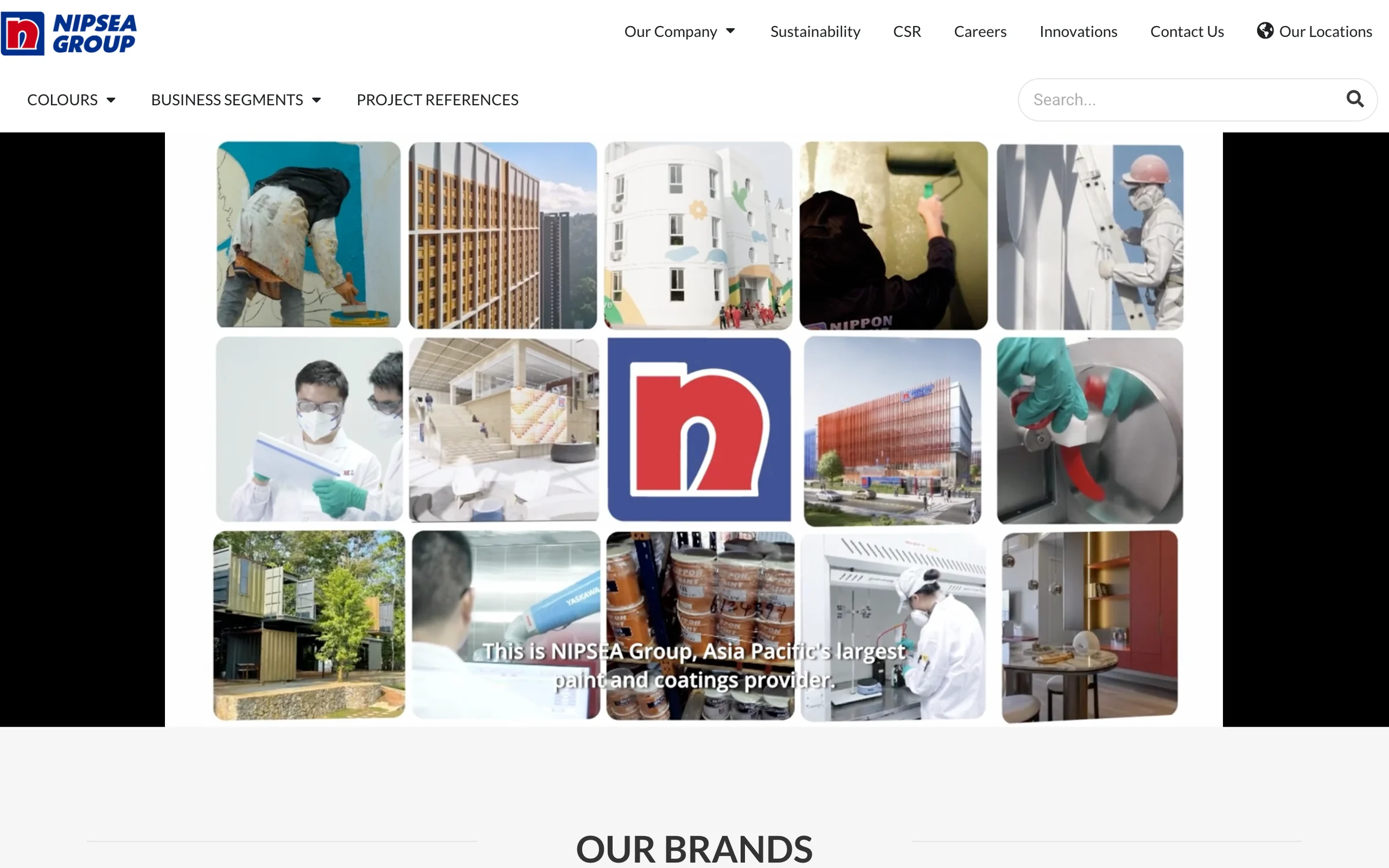
- NIPSEA GroupGroup website for NIPSEA Group (Nippon Paint), Asia Pacific’s largest paint and coatings group, headquartered in Singapore with more than 147 companies across 28 locations.nipsea.group
- iWISERSBrand website for iWISERS, a social and data intelligence agency that tracks every conversation about a brand and turns it into action.iwisers.com

Questions
Asked by businesses in Ireland
Page updated 5 November 2026
How much does it cost to have a website built?
There is no fixed price. The main drivers are the number of distinct page templates, features such as booking or a CRM connection, and whether copy and photographs are ready to publish. We send a free quote once the scope is agreed, so you can see what the proposed work covers.
Is a website still worth investing in?
A website is worth considering when it has a clear job for your business. For a startup, that could mean explaining the product plainly and giving visitors a way to join a waitlist or book a demo. Define that action before deciding what the first page should contain.
Can a custom website still have an editor?
Yes. A custom Next.js site can include an editor, while WordPress suits a team that wants to make frequent content changes itself. We recommend an option after understanding how your team works, including who will publish updates and what they need to change without a developer.
What is included in the website build?
The build includes search setup with metadata, structured data, a sitemap and fast-loading pages. We can also work with your existing logo, colours and fonts, preparing those assets for use on the web where needed. Tell us which brand files you already have when discussing the scope.
Will I own the website?
Yes. You own the domain, content and code, with no lock-in. Keep track of those assets and who has access to them as the project progresses, so your business can manage its website and decide who works on it after handover.
What happens after the website launches?
We provide ongoing support after launch. Within your business, decide who will keep news, projects and job posts current. You can also measure enquiries in analytics by tracking form submissions, calls and WhatsApp clicks as conversions, then checking which pages those enquiries started from.
Tell us what you need
Sohail, Founder, replies within 1 working day (Mon–Sat, IST). Free and no obligation.