UI UX design agency in United Arab Emirates
You get screen designs and a clickable prototype for the tasks your customers need to complete. For your business in the United Arab Emirates, we map user flows, design for desktop and mobile, and prepare the work for development. We share specifications and assets with your developers and stay available to answer questions while the design is built.
- 250+ projects delivered
- Reviews on Google ↗
- Reply within 1 working day
Reply within 1 working day
What happens next
- 01Tell us what you need, in the form or on WhatsApp.
- 02Sohail replies within 1 working day (Mon–Sat, IST).
- 03We agree the scope together, then send your quote.
- Projects delivered
- 0+Projects delivered
- Years building for the web
- 0+Years building for the web
- Live and in use
- 0%Live and in use
What you get
What’s included in UI/UX design
Research & flows
User journeys and flows mapped from how your customers actually use the product.
Wireframes
Page and screen structure agreed before any visual design.
Visual design
Screens for desktop and mobile in your brand, ready for development.
Design system
Reusable components and styles so new screens stay consistent.
Prototype
A clickable prototype to test with users before you build.
Developer handover
Specs, assets and support while the design is built.
Tools we use: Figma, FigJam, Design tokens, Tailwind CSS.
Choosing
What should you design first?
Start with the shape of the product. An incremental redesign suits a live product when existing users would dislike sudden changes; a full redesign suits a product whose structure no longer matches how people use it. The choice affects how much of the existing interface you keep and how much you need to reconsider. For an early product, an established UI kit or open-source component library can speed up the first screens. A custom visual language makes more sense when the interface itself is part of what customers pay for.
Then decide how much reusable design you need. A small component library is often enough for a marketing site or an early product, giving developers a shared set of elements without the work of creating a full system. A full design system suits a product with many screens or several teams working on it. Consider the screens you need now alongside the work your developers will need to carry forward as the product grows.
Market
What buyers in the United Arab Emirates expect
The screens you prioritise depend on what your customers need to do. If you run a SaaS business, clear onboarding, dashboards and settings help users find their way to the product's value early. Those screens deserve attention before you add more features.
For an online store, look closely at product, cart and checkout screens on a phone. Fewer steps and form fields make the purchase task quicker to use.
Health, finance and insurance businesses have a different task: collecting sensitive details clearly. Forms also need to pass accessibility checks, so review the labels and fields as part of the design.
Rules
What a UI/UX project in the United Arab Emirates has to handle
Arabic is the official language, while English and other major languages are also widely used. That affects which screens and labels you need to prepare for your audience. We set up desktop and mobile screen designs in your brand for the languages agreed in the scope, including the labels and forms customers need to use. Bring the language requirements to the first discussion so they can be considered across the screen designs, instead of being left until the developer handover.
How it runs
How a UI/UX design project runs with us
We work remotely over video calls, WhatsApp and a shared project board. India time is 1h30m ahead; the board keeps decisions and work visible across that difference.
- 01
Discover
We learn about your business, audience and goals, then agree the scope with you. Tell us which customer tasks need attention first and who will review the work.
- 02
Map and review
We sketch flows and wireframes step by step. You check them against how customers and staff actually work, before visual decisions make the structure harder to change.
- 03
Prototype
We build a clickable version for testing before development. You invite customers or staff to try it; watching where they hesitate or get lost gives the team something specific to discuss.
- 04
Hand over
We provide specifications, assets and support while the design is built. Your developers have the information they need, and you have a route for questions during the build.
Checklist
What to have ready before we talk
Bring the material that shows what users need and where the current product gets in their way.
- User types and tasksMark the tasks that bring revenue or lead to support calls, so they can be reviewed early.
- Evidence of frictionShare analytics, session recordings, support tickets or sales call notes that show where people get stuck.
- Brand and design filesGather your guidelines, logo, fonts, colours and any existing files in Figma or another tool.
- Technical limitsAsk your developers about their front-end framework, component library and anything the back end cannot yet do.
- Test participantsIdentify customers or staff willing to try a prototype and explain what confuses them.
Cost & time
What affects the cost and time of UI/UX design
The scope of the design work determines how much research, iteration and preparation is needed.
Research
Interviews, surveys and usability tests add work, while giving you stronger evidence than a desk review alone.
Complex flows
Onboarding, checkout, multi-step forms and permission settings need more iteration than content pages.
Design system
Building a system from scratch adds work at the start, then saves effort on later screens.
Screen states
Empty, loading, error and no-results states need designs too. Long names and missing permissions also need attention before developers build the screens.
Avoid
Mistakes to avoid with UI/UX design
Polishing too early
Agree the flows first. Otherwise, visual designs can need restructuring when the team discovers that the steps do not work.
Leaving out difficult states
Design errors and empty states alongside the ideal path, so developers do not have to improvise them during the build.
Ignoring the build
Check the chosen front-end framework and existing component library before designing components that are difficult to implement.
Making forms hard to use
Check text contrast and tap targets, and give fields visible labels instead of using placeholder text as the only label.
Our work
Projects we’ve built
- iWISERSBrand website for iWISERS, a social and data intelligence agency that tracks every conversation about a brand and turns it into action.iwisers.com

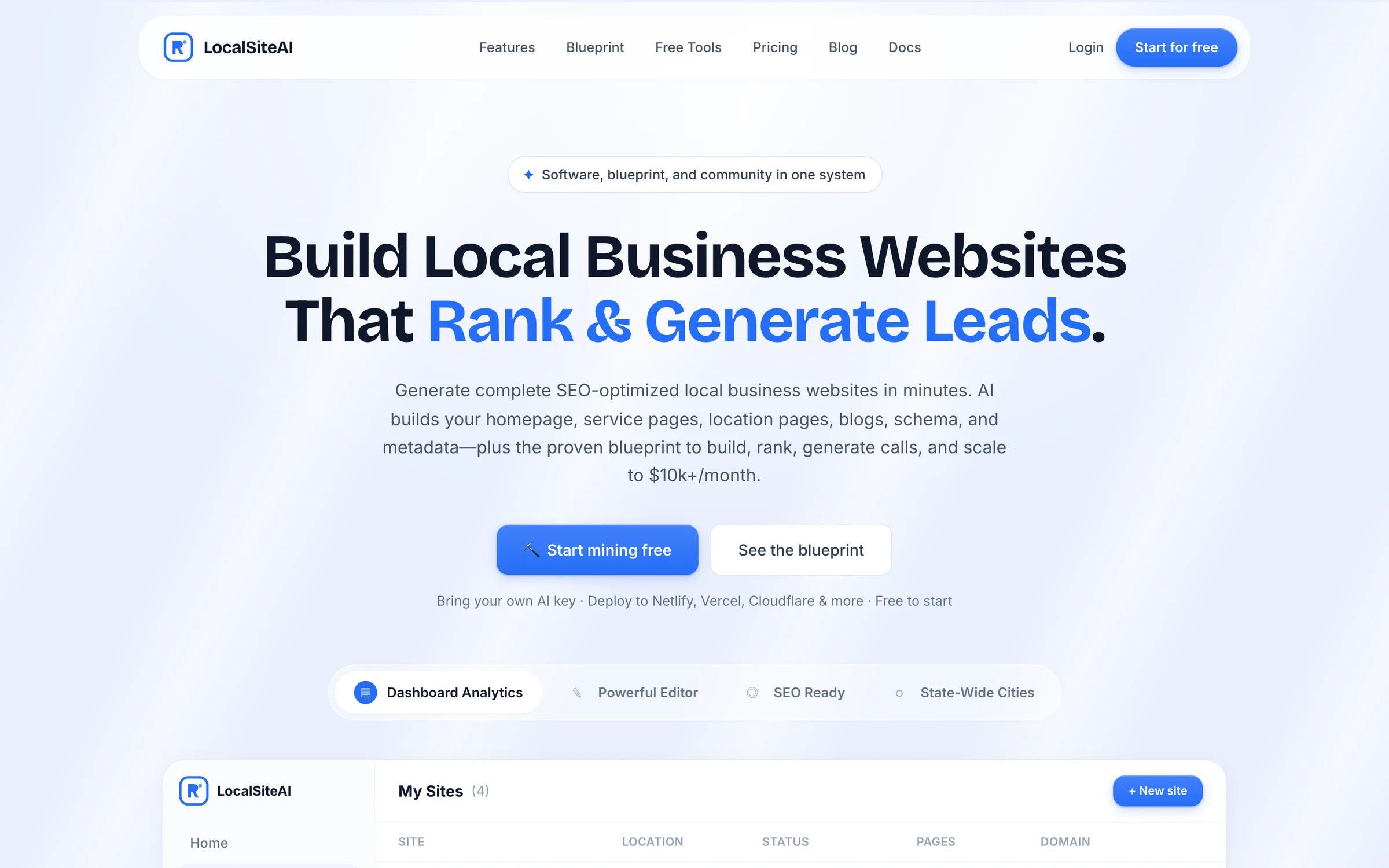
- LocalSiteAIAn AI website generator for local businesses. Users complete a short wizard, AI writes every page, and the site deploys in one click.localsiteai.com
Questions
Asked by businesses in United Arab Emirates
Page updated 5 November 2026
What does a UI/UX design agency do?
A UI/UX design agency plans how a product works and how its screens look. UX covers the order of tasks, screen structure, labels and error handling; UI covers the visual design of each screen. For your project, that means considering what a customer needs to do as well as what they see.
How much does UI/UX design cost?
There is no fixed price: the scope determines the work. Separate designs for web, iOS and Android, or for desktop and mobile layouts, add screens and reviews. The choice between low-detail wireframes and a clickable prototype also changes the work involved, particularly when you want to test flows before writing code.
Should I hire for design only or design and build?
Design-only work suits you if you already have developers who will build the product. Design and build from one team suits you if you want a single party responsible for the finished product. Decide who will take the screens into development before agreeing the scope, so the handover fits your working arrangement.
What should be included in a design handover?
Ask for specifications, exported assets, named components and notes on interactions, with the designer available to answer build questions. Wireframes establish page and screen structure before visual design, while reusable components and styles help keep later screens consistent. You can also test a prototype with users when a design decision is disputed.
Will I own the work?
You own your domain, content and code, with no lock-in. That gives you control over those parts of your product after the work is complete. Discuss the files and assets your developers need during the project as well, so they have what they need to work with the design.
What should I review after launch?
Compare task completion, drop-off between steps, support tickets and conversion with the figures from before the change. Keep the design system and files updated as the product changes, and collect feedback from support and sales teams. Their reports of user complaints can help you plan the next design round.
Tell us what you need
Sohail, Founder, replies within 1 working day (Mon–Sat, IST). Free and no obligation.