UI UX design agency for businesses in Qatar
Get page and screen designs that give your customers a clear path through your product. For your business in Qatar, we map user flows, agree wireframes and prepare the specifications and assets your developers need. We are a web, app and AI studio in India, and we work with you from the first flow through to the design handover.
- 250+ projects delivered
- Reviews on Google ↗
- Reply within 1 working day
Reply within 1 working day
What happens next
- 01Tell us what you need, in the form or on WhatsApp.
- 02Sohail replies within 1 working day (Mon–Sat, IST).
- 03We agree the scope together, then send your quote.
- Projects delivered
- 0+Projects delivered
- Years building for the web
- 0+Years building for the web
- Live and in use
- 0%Live and in use
What you get
What’s included in UI/UX design
Research & flows
User journeys and flows mapped from how your customers actually use the product.
Wireframes
Page and screen structure agreed before any visual design.
Visual design
Screens for desktop and mobile in your brand, ready for development.
Design system
Reusable components and styles so new screens stay consistent.
Prototype
A clickable prototype to test with users before you build.
Developer handover
Specs, assets and support while the design is built.
Tools we use: Figma, FigJam, Design tokens, Tailwind CSS.
Choosing
Should you redesign the whole product or start with a flow?
Start with the problem you need to solve. An incremental redesign suits a live product when users are accustomed to it and a sudden change would disrupt their work. A full redesign makes more sense when the product’s structure no longer fits how people use it. The full route gives you room to rethink that structure, while an incremental approach keeps more of the existing experience in place.
For an early product, an established UI kit or open-source component library can reduce the effort needed to get started. A custom visual language suits a product where the interface itself is part of what customers pay for. A small component library is often enough for a marketing site or early product; a full design system suits products with many screens or several teams.
Use low-detail wireframes to settle structure, then a clickable prototype when you need people to try a flow. For a new product or a high-stakes flow, interviews and usability tests provide direct feedback; for an existing product, analytics and support tickets show where to investigate. We learn about your audience and goals and agree the scope with you.
Market
What buyers in Qatar expect from a digital product
The tasks your customers or staff need to complete should guide the screens you commission. For an online store, examine the product, cart and checkout screens on a phone: fewer steps and form fields give customers less to work through. For a software product, look closely at onboarding, dashboards and settings so users can find what they came to do.
Your users may be staff working in an internal tool throughout the day. In that case, review repeated steps and errors in their existing workflow before deciding which screens to redesign. If you run an agency or development team without a designer, you will also need files and specifications that your developers can build from directly.
Rules
How should a UI/UX project handle language in Qatar?
Arabic is the official language, and English is commonly used in commerce. If your product needs to serve people in both languages, we set up Arabic and English page and screen designs for desktop and mobile, with labels agreed as part of the design work. Decide which customer tasks need each language before the screens are designed. That gives us a clear scope for the pages and flows to review with you, rather than leaving language choices until the designs are handed over.
How it runs
How a UI/UX design project runs with us
We work remotely over video calls, WhatsApp and shared project boards. IST is 2h30m ahead, so we use the shared board to keep feedback and project work visible across the time difference.
- 01
Map the flow
We sketch the steps and wireframes with you. You check them against the way your customers and staff actually work, including the tasks they need to complete.
- 02
Design the screens
We prepare desktop and mobile screens in your brand, ready for development. You review the visual direction and tell us where it needs refining.
- 03
Make the prototype
We build a clickable version of the flow before development starts. You can use it to walk through the proposed experience and identify anything that needs another look.
- 04
Test with people
We watch real users try the prototype and note where they hesitate or get lost. You help by inviting customers or staff to take part.
- 05
Hand over for development
We provide specifications and assets and support the design during the build. You involve the people responsible for implementing the screens.
Checklist
What to have ready before we talk
Bring what you already have so we can understand the product and the people using it.
- Analytics, session recordings, support tickets or sales call notes that show where users get stuck.
- Your brand guidelines, logo, fonts, colours and existing design files, if you have them.
- Details from your developers about the front-end framework, existing component library and back-end limits.
- Products your users already know, with notes on what works and what annoys them.
- Customers or staff willing to try a prototype and explain what confuses them.
Cost & time
What affects the cost and timeline of UI/UX design?
The scope determines how much design and review work is needed.
Screens and roles
A dashboard with several user roles needs more distinct screens than a marketing site with a handful of templates.
Flow complexity
Onboarding, checkout, multi-step forms and permission settings need more rounds of iteration than content pages.
Design system
Building reusable components from scratch adds work at the start, while saving effort as later screens are designed.
Platforms and layouts
Separate web, iOS and Android designs, or desktop and mobile layouts, add screens to design and review.
Avoid
Mistakes to avoid with UI/UX design
Leaving out awkward cases
Include errors and empty states in the design, so developers do not have to improvise them during the build.
Settling a debate by opinion
Put the prototype in front of real users and use what you observe to decide what needs changing.
Ignoring the front-end setup
Check the chosen framework and existing component library before designing components that are difficult to build.
Walking away after handover
Keep the designer available for development questions, so the built product does not drift through guesswork.
Our work
Projects we’ve built
- iWISERSBrand website for iWISERS, a social and data intelligence agency that tracks every conversation about a brand and turns it into action.iwisers.com

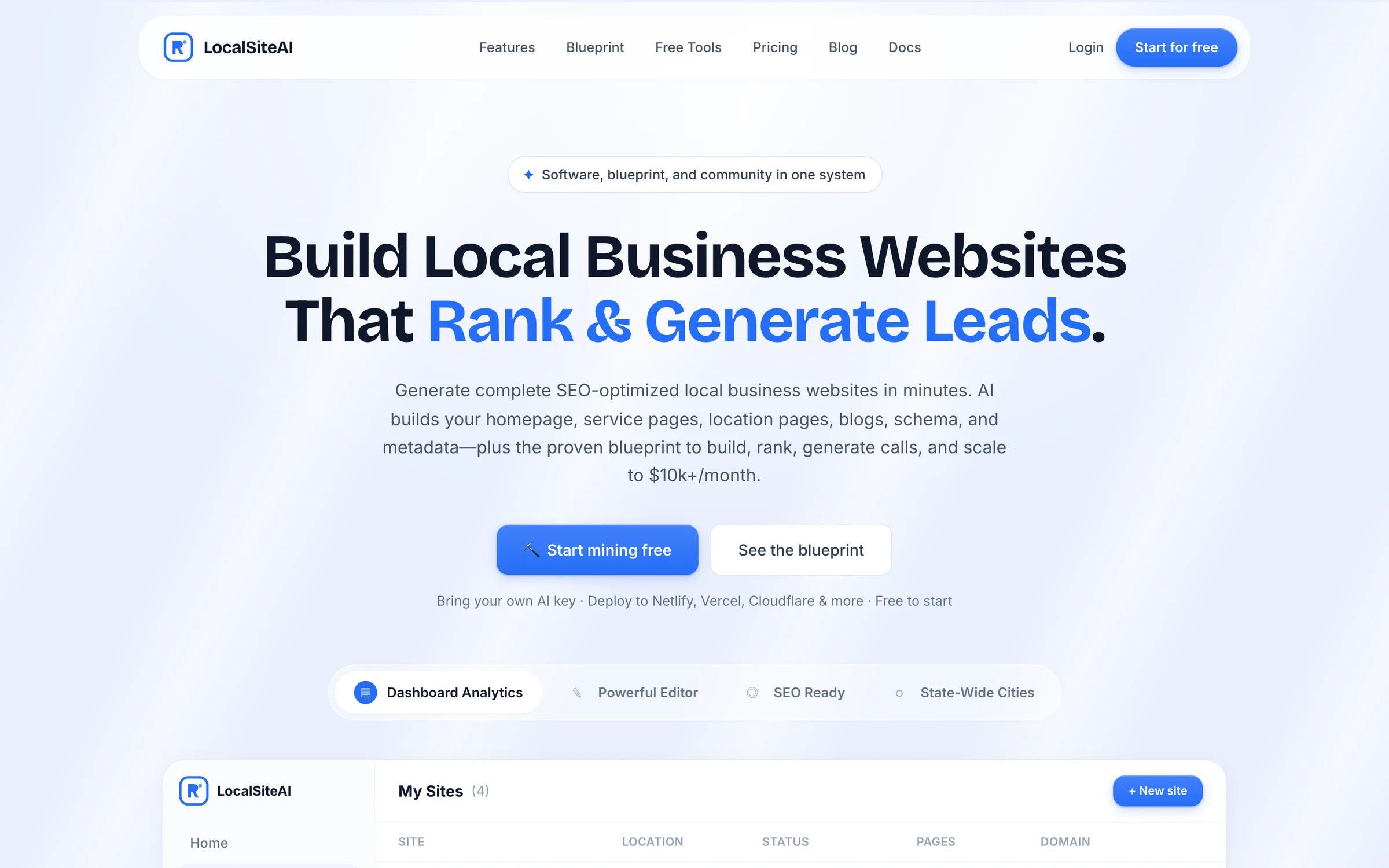
- LocalSiteAIAn AI website generator for local businesses. Users complete a short wizard, AI writes every page, and the site deploys in one click.localsiteai.com
Questions
Asked by businesses in Qatar
Page updated 5 November 2026
How much does UI/UX design cost?
There is no fixed price: the work depends on the scope you agree. The range of screen states to design affects the effort, as does the reusable component work involved. Empty, loading and error states all need consideration; a component library also requires decisions about buttons, fields, type and spacing.
What does a UI/UX design agency do?
A UI/UX design agency plans how a digital product works and how its screens look. UX covers the order of tasks, screen structure, labels and error handling. UI covers the visual appearance of each screen. Both are useful to discuss when you are defining what you need someone to design.
What should my developers receive at handover?
Your developers should receive specifications, exported assets, named components and notes explaining interactions. They also need access to the designer for questions during the build. Ask how the handover will describe the behaviour of the screens, so your developers have more to work from than a set of static images.
How is accessibility included in the design?
Accessibility is addressed through choices such as colour contrast, readable text, visible focus states, clear labels and tap targets large enough to use. Check forms in particular: labels that appear only as placeholder text can cause problems. The W3C’s WCAG provides success criteria at levels A, AA and AAA.
What should we review after launch?
Compare the changed design with your earlier figures for task completion, drop-off, support tickets and conversion. Ask support and sales teams what users are reporting, then use that feedback to plan the next design round. Keep the design files and component system updated as the product changes.
Should a startup test a design before development?
Yes. A clickable prototype gives people a way to try the proposed flow before you build it. For a startup preparing a first version, flows and a prototype also give you something concrete to discuss with potential users or show investors while the idea is still taking shape.
Tell us what you need
Sohail, Founder, replies within 1 working day (Mon–Sat, IST). Free and no obligation.